






 Bangalore
3D Learning: How It Improves Education in Classrooms
Education has travelled a remarkable distance in a single generation. From blackboards and textbooks to digital tools and smart boards, the classroom keeps quietly reinventing itself. Among the most promising of these innovations is 3D learning, a method that uses three-dimensional technology to make lessons more interactive, more realistic, and far more engaging for students. Many of the best schools in Bangalore are now adopting 3D learning to enrich the way children experience their lessons. So what exactly is 3D learning, and how does it improve education in classrooms? Let's take a closer look.
What is 3D Learning?
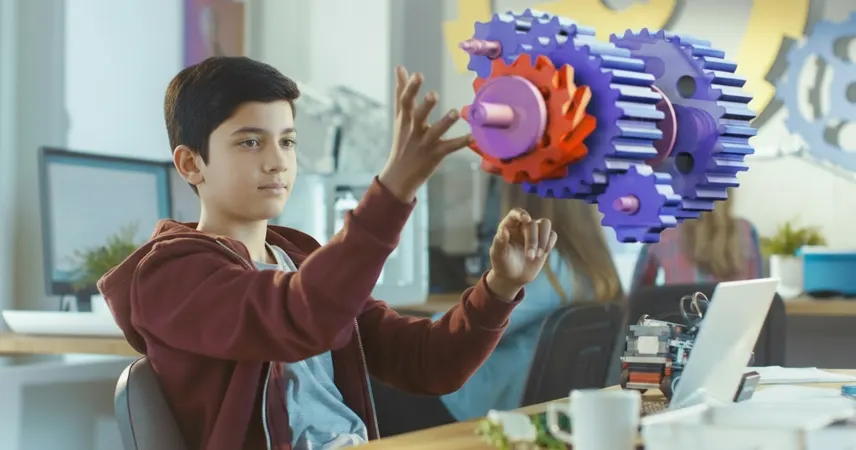
3D learning means teaching and learning through three-dimensional models, animations, and simulations. Instead of studying flat pictures on a page, students can turn an object over in digital space. A learner studying the human heart, for instance, can rotate a 3D model and watch it pump blood in real time. The effect is learning that is visual and practical at once: students do not merely read or hear about a concept, they see it working. It is little wonder that so many schools now regard 3D classroom technology as a genuinely powerful teaching tool.
Benefits of 3D Learning
The advantages of 3D learning reach into almost every subject. These are the ones parents and educators notice first:
- Better Understanding of Complex Topics
Some subjects, like science or mathematics, resist explanation through words and pictures alone. 3D education tools let teachers reveal step-by-step processes in rich detail. Chemical reactions, for example, can unfold as 3D simulations, so students grasp clearly what a diagram could only hint at. - Improves Memory and Retention
When students see something in 3D, it feels real, and what feels real stays remembered. Visual, interactive experiences help the brain hold on to information far more effectively than text alone. - Increases Engagement and Interest
Many students quietly disengage from traditional lessons. 3D teaching methods restore a sense of wonder to the classroom. A history lesson on ancient civilisations comes alive when students can virtually walk through a 3D model of a pyramid or temple. - Encourages Active Participation
Rather than simply listening to the teacher, students step into the lesson itself. 3D learning invites them to zoom, rotate, and explore models, turning passive listeners into active, curious participants. - Prepares Students for the Future
The world is moving steadily toward advanced technology, and education must keep pace. 3D technology readies students for careers in medicine, engineering, architecture, and design, the very fields where 3D models are part of daily work.
Importance of 3D Learning in Classrooms
The importance of 3D learning goes well beyond making lessons exciting. Its deeper gift is bridging theory and practice. In biology, students often struggle to picture what organs actually look like inside the body; a 3D model reveals exact shape, size, and position at a glance. In geography, 3D maps and models let learners wander among mountains, rivers, and landscapes as though standing within them, and understanding follows naturally.
How 3D Classroom Technology Works
3D classroom technology takes different forms depending on the subject at hand. Some schools use 3D projectors, while others turn to virtual reality (VR) or augmented reality (AR):
- 3D projectors display models on a screen, often viewed with special glasses.
- VR headsets allow students to step inside a digital world and explore lessons in detail.
- AR apps bring 3D images into real-world settings using tablets or smartphones.
Educators simply choose the method that best serves the lesson. Whichever form it takes, these tools make classrooms more interactive and give students a genuinely hands-on learning experience.
Examples of 3D Learning in Education
In real classrooms, this looks like:
- Science: Students can watch the solar system in 3D and see planets moving in their orbits.
- Mathematics: Complex 3D shapes and graphs can be rotated and studied from all angles.
- History: Ancient monuments and historical sites can be reconstructed in 3D for virtual tours.
- Geography: 3D maps of volcanoes, mountains, or rivers help students understand terrain and features.
- Medical Studies: Aspiring doctors can study the human body in detail using 3D anatomy tools.
The Role of 3D Education Tools
3D education tools — software, apps, and hardware — form the quiet backbone of this way of learning. Some let teachers craft their own content; others offer ready-made 3D lessons. That flexibility allows educators to tune material to every age group, from animated characters that delight younger learners to advanced simulations that stretch older students.
The Future of 3D Learning
The future of 3D learning looks genuinely bright. As the technology becomes more affordable, more schools will bring it into their classrooms. Expect fully virtual classrooms built around 3D environments, collaborative 3D projects, and AI-powered customisation that shapes 3D lessons around each individual student.
Challenges of 3D Learning
Like any new technology, 3D learning brings its share of challenges. Upfront costs for projectors or VR headsets, along with teacher training, can be real obstacles. Yet as demand grows, prices should fall and training will become more widely available. The wisest approach balances the best of traditional teaching with modern 3D methods, letting each strengthen the other.
Why Students Love 3D Learning
Students raised on video games and interactive media take to 3D learning as though it were made for them. Instead of memorising facts, they experience knowledge firsthand. This hands-on approach kindles exploration and questions — which is, after all, the true spirit of learning.
Conclusion
3D learning is more than a passing trend — it is a quiet revolution in education. By making lessons engaging, clear, and memorable, 3D technology can transform classrooms across every subject. Schools that adopt 3D classroom technology are preparing their students for a future in which digital skills and interactive learning will be essential. For learners, that means school becomes less about memorising and far more about experiencing knowledge in meaningful ways.
FAQs
What is 3D learning in simple words?
3D learning is a way of teaching that uses three-dimensional models and simulations to bring concepts clearly to life.
How does 3D learning improve education?
It makes lessons interactive, helps learners grasp complex topics, strengthens memory, and deepens engagement.
What are the benefits of 3D classroom technology?
Clearer understanding, higher retention, greater engagement, and thoughtful preparation for future careers.
Do students need special equipment for 3D learning?
Sometimes yes—3D projectors, VR headsets, or AR apps are often used, though more affordable options are steadily emerging.
What is the future of 3D learning in schools?
Expect virtual classrooms, AI-personalised 3D lessons, and collaborative digital projects to become part of everyday schooling.
Priya Nair
28 Sep, 2025 09:15amOur school introduced AR-based 3D models for biology this term — students are much more engaged and can visualise organs clearly. Excellent write-up!
Karthik Rao
28 Sep, 2025 10:02amAR and VR help students with spatial subjects like geometry and geography. Looking forward to more classroom pilots.
Meera Joshi
29 Sep, 2025 04:20pm3D learning resources helped my students understand complex chemistry reactions — they loved the simulations!